Mid-week surprise: our Claude weekly limit was suddenly back at zero
A short story from the engine room: today, September 5, we were in the middle of a perfectly ordinary session — working through tickets, building content, cleaning up on the side. At some point a glance at the usage panel, more out of habit than concern. And there it was: 5% used. Weekly. On a Friday.
No announcement, no email, no changelog entry. The weekly quota was simply back. And on top of it the note we already know from the last limit update: “Your limits are temporarily increased. Your weekly Claude Code limit is 50% higher until September 13.”
In practice: a full weekly budget plus a 50% bonus — and the whole thing only runs for another week.
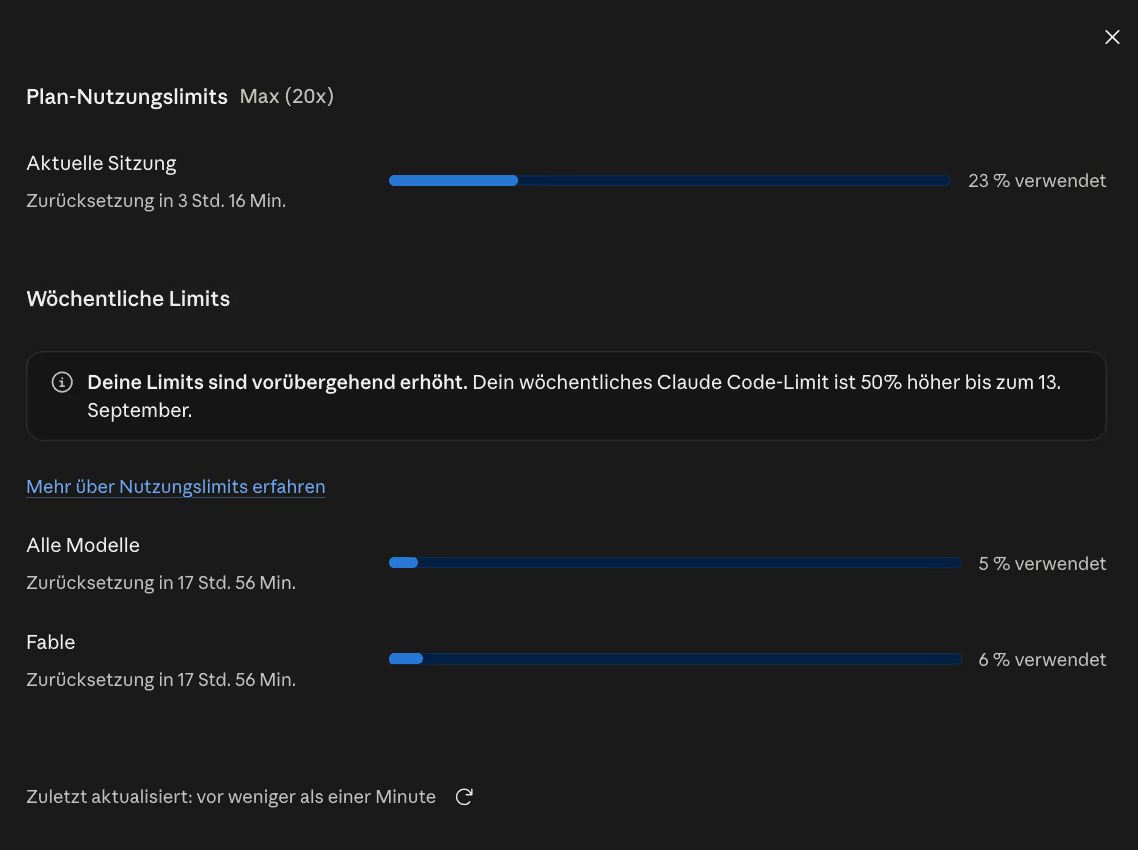
The screenshot that made us look twice
Friday midday, mid-week — and the weekly quota sits at 5 percent.
At the top the current session at 23 percent. Below it the weekly limits: 5 percent across all models, 6 percent on Fable, resetting only in just under 18 hours. In between, the note that limits are 50 percent higher until September 13.
What this means for you
- Weekly limits are back near zero on a number of accounts — worth a quick look.
- The temporary 50% boost runs until September 13. After that the new permanent rule (+25%) kicks in, which is net less than right now.
- Capacity you don’t spend by then is gone. It does not carry over.
Our recommendation: fire off the heavy jobs you usually postpone
Free capacity is exactly the moment for the tasks you normally push ahead of you because of the limit. Not the small fixes — those always fit. The long, expensive runs.
1. A security pass across the whole project. Not a spot check, but properly through it: dependencies, auth paths, file uploads, env handling, RLS rules, rate limits. A run like that eats context like nothing else — which is precisely why it belongs in a week with bonus budget.
2. Kick off the refactor you don’t normally dare to start. The module that has been too big for months. The file with two responsibilities. The copy-paste twin you keep maintaining twice. Refactors are unpopular because they touch many files at once and run long. That’s exactly the kind of task that benefits most when the limit doesn’t shut the door after two hours.
3. Let Fable 5.1 work over a longer stretch. The quality difference with models of this class doesn’t show up in a five-minute task. It shows when they get to stay on a problem: read thoroughly, try several approaches, verify, clean up. If you keep throttling the model for budget reasons, you never get to see what it can actually do.
And if you don’t have time to sit next to it?
That’s exactly what we built boostN for. Open tickets into the queue, start the execution engine, let it run through your own subscription — the tasks work while you’re doing something else. Weeks with raised limits are the ideal case: you convert budget that would otherwise expire into finished tickets.
Our own order for this week looks like this: the security pass first (because it breaks nothing), then the refactor (because everything else gets easier afterwards), then the feature tickets that have been sitting around.
The small print
We don’t know whether the reset was a deliberate move by Anthropic or a side effect of the limit change landing on September 14. There’s no official statement, and we didn’t see it on every account. Just check your own panel — worst case it costs you ten seconds, best case you just found a week of extra capacity.
Discover more
Prompt Caching in practice: from €280 to €47 per month
Real numbers from a customer setup with Claude Sonnet. What prompt caching delivers, when it pays off — and where the pitfalls are.
GlossaryClaude Fable 5.1
Anthropic's flagship Claude Fable model, released on 1 September 2026. A frontier model for demanding reasoning, coding, research and long-running agents; 1M-token context, multimodal input, proprietary access via API and the Claude apps.
EncyclopediaComparing AI models — who builds what and how to choose
The major model families in 2026 at a glance. Who builds Claude, GPT, Gemini, Llama, Mistral, DeepSeek, Qwen — and which model to pick when.